
1.
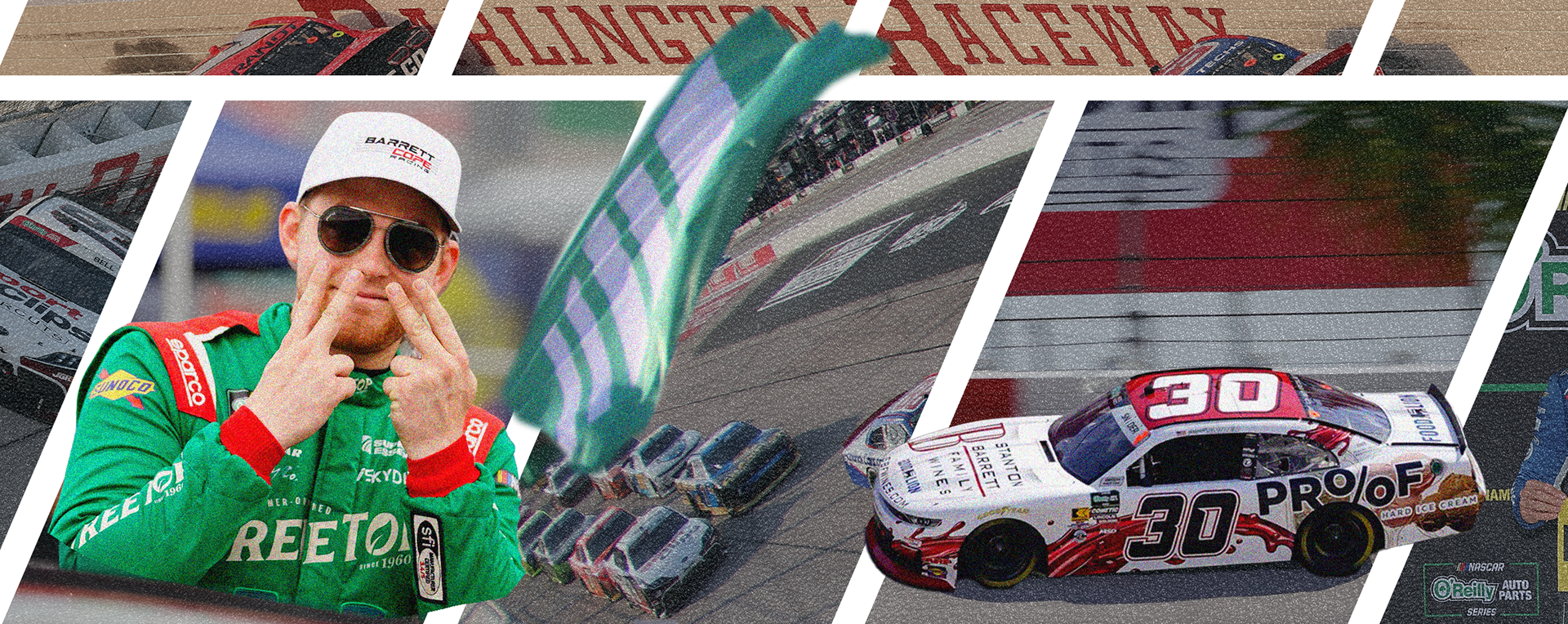
The roar of V8 engines envelops Darlington Raceway.
What was once a morning where you’d try to hold on to the feel of the relatively cool air on your skin has become a stifling early afternoon. It’s mid-March, and the humidity and heat of the day start to peak in their extremity.
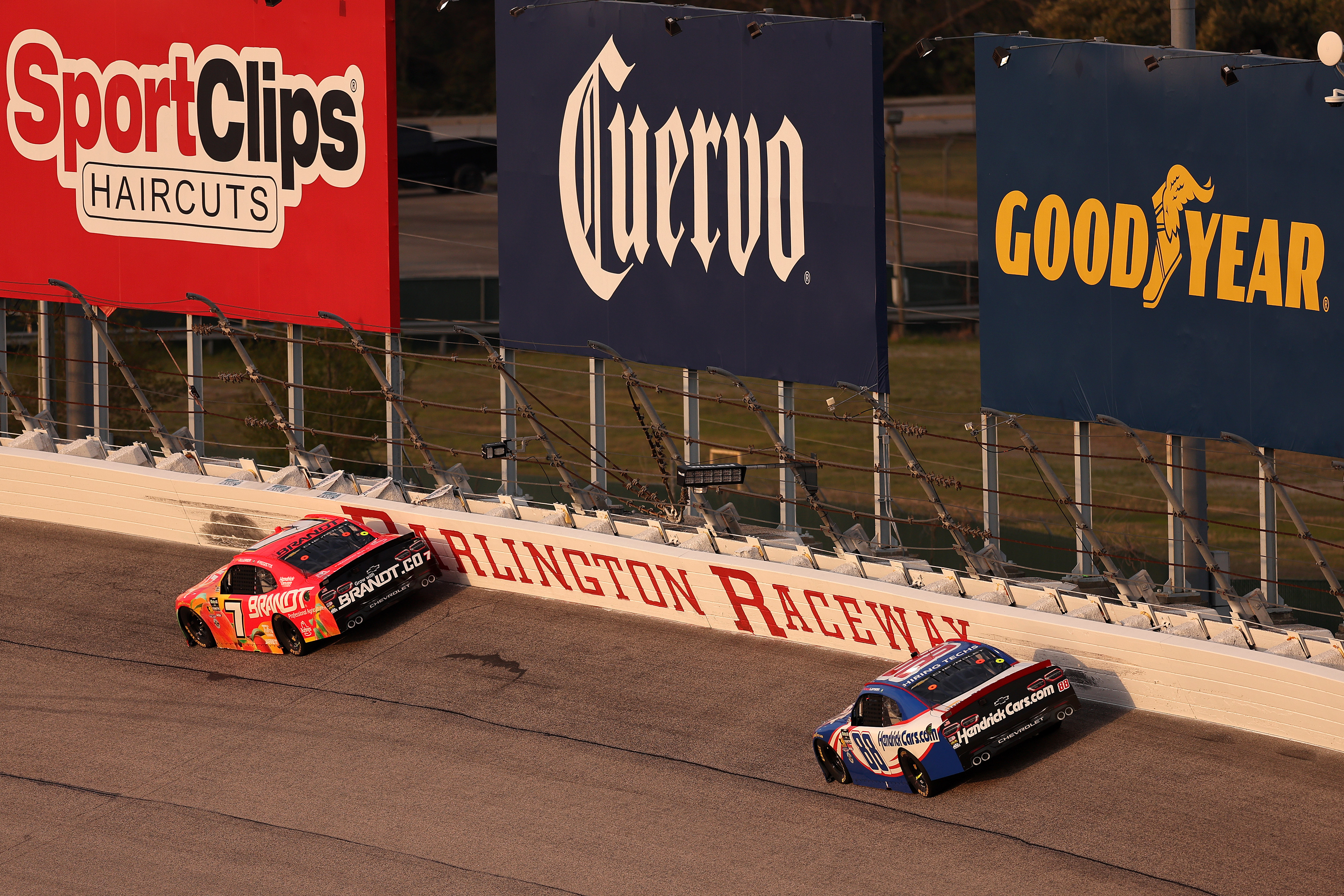
On this sun-slathered track that marketers, fans, and brands call Too Tough to Tame, 39 drivers in the NASCAR O’Reilly Auto Parts Series (NOAPS) roll onto the backstretch, one at a time, for half a lap before taking the green flag. They’ll go full bore for just under 1.4 miles on one of the most historic ovals in stock car racing, with their single-lap times lighting up the scoring pylon in order of the smallest number, setting the lineup for the 147-lap race in a few hours.
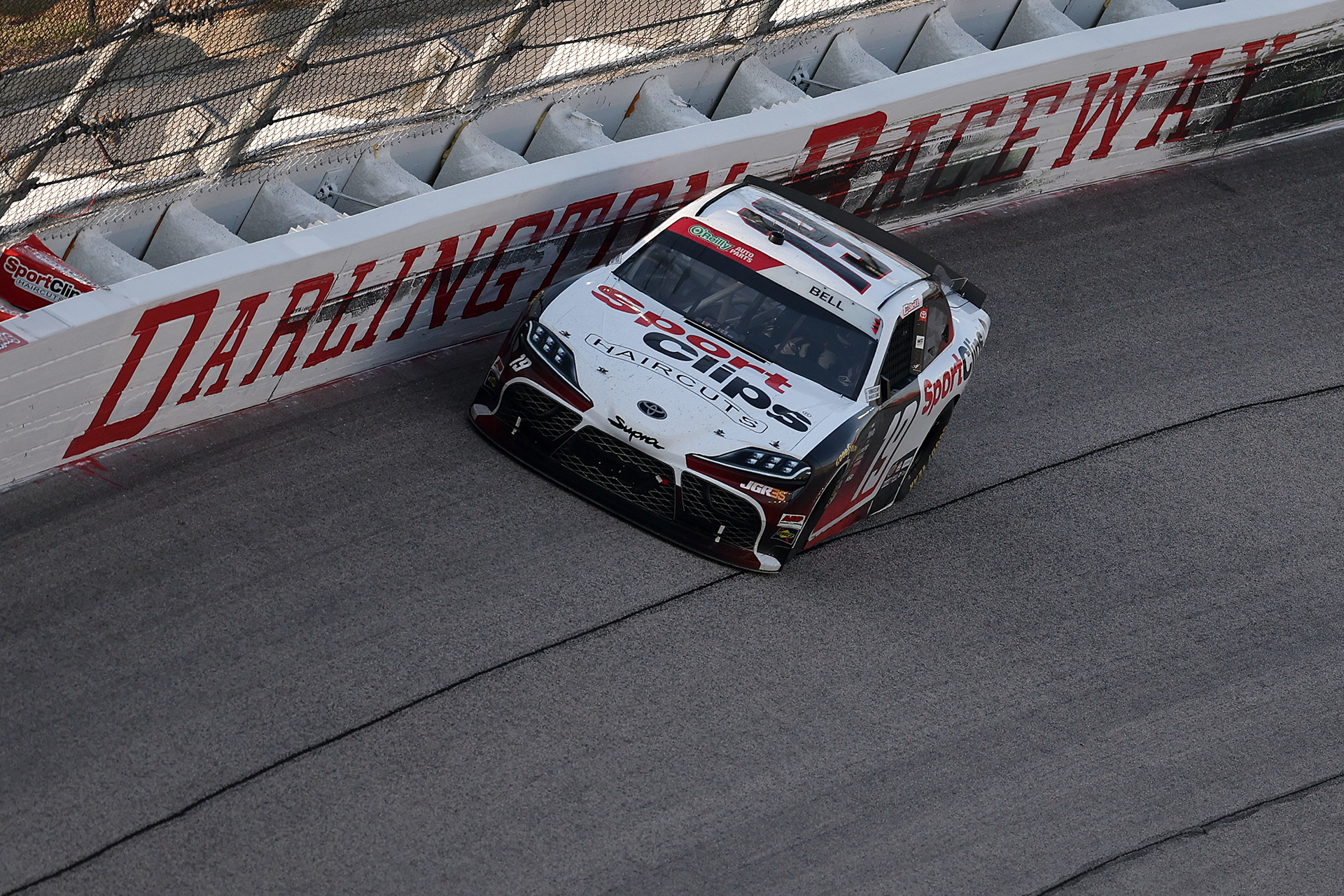
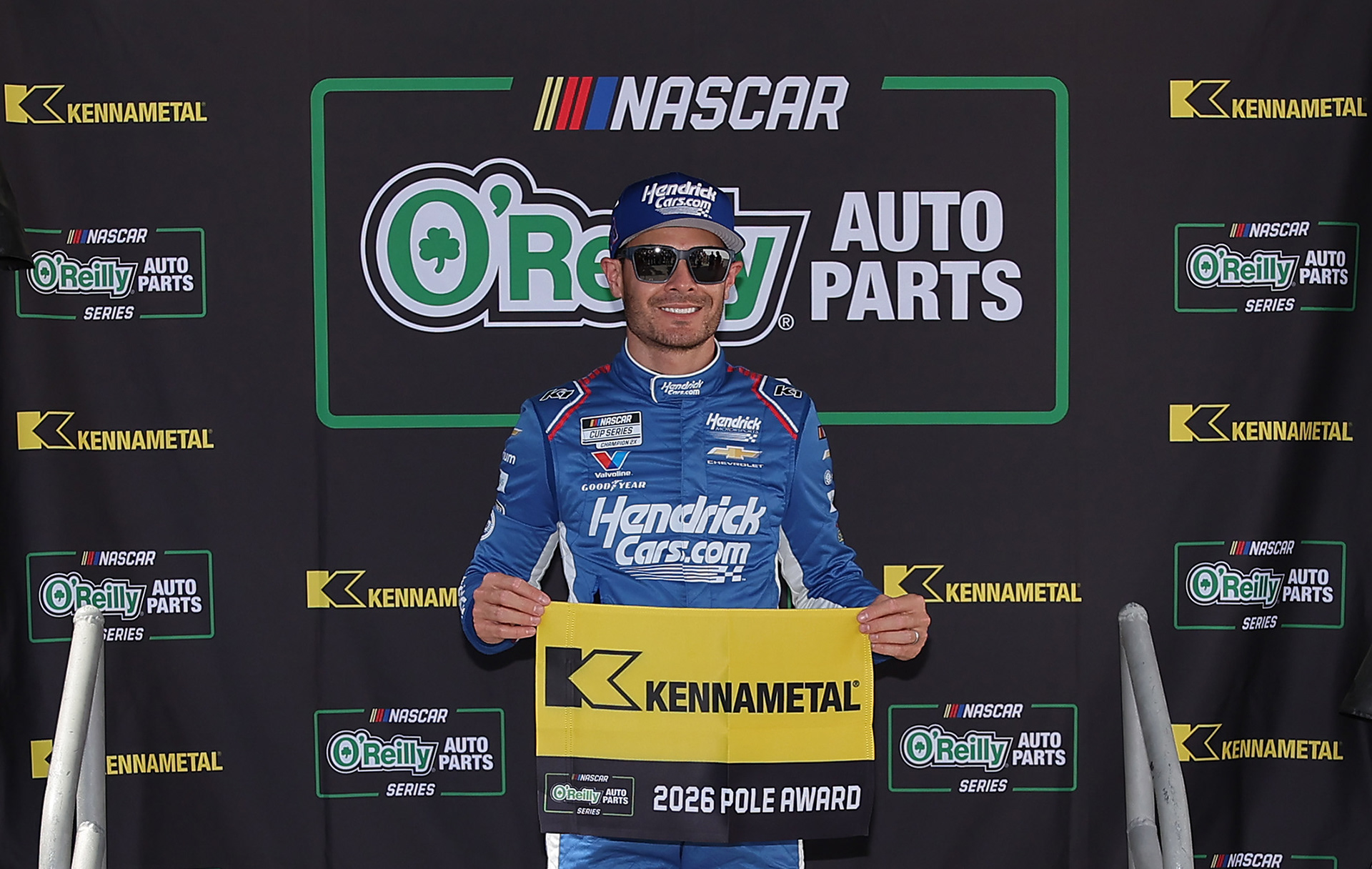
Of the 39 drivers and cars, there is pedigree; two-time Cup Series champion Kyle Larson and six-time Cup winner Ross Chastain are both driving for JR Motorsports, while perennial Cup championship contender Christopher Bell is competing for Joe Gibbs Racing. They’ll compete against week-to-week NOAPS race winners — Justin Allgaier, Sheldon Creed, Jesse Love, and more — to earn pole position and start this afternoon’s event from first place.
Of the 39 drivers setting a qualifying lap, 22 of them have yet to win a NOAPS race. Seventeen of them, meanwhile, have. Of those that have been victorious, 13 are regulars in the so-called “second division” of NASCAR (a phrase that seriously downplays the average talent level of the series). Three are Cup Series regulars (Larson, Chastain, and Bell).
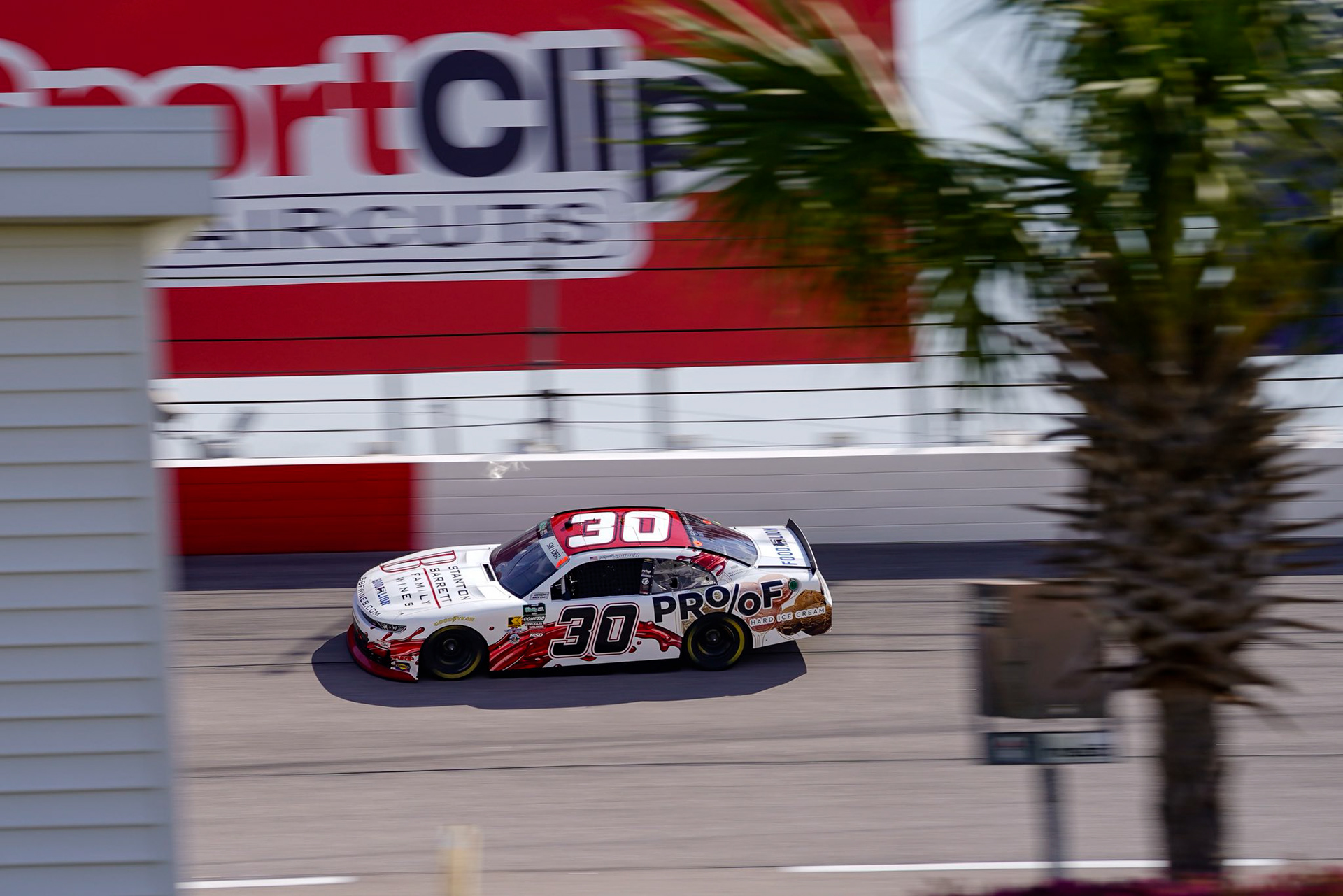
The remaining race winner is 31-year-old Myatt Snider, who is about to set a time in the No. 30 Barrett-Cope Racing Chevrolet. Depending on the time he sets and the times of his competitors, he may miss the race entirely.
Credit: @MyattSnider on X
2.
In the NOAPS, a maximum of 38 cars can start a race, regardless of how many teams enter. Practically every race sees more than 38 teams submit entries.
While the Cup Series regulates its weekly list of contenders through a charter system, where 36 entries are guaranteed a starting spot and the remaining four entries (a total of 40) are available to “open” teams, the Daytona 500 is regularly the only race each season where more teams enter than there are spots available. It’s “The Great American Race,” and it gets its prestige accordingly.
There is no such charter system in the NOAPS. Setting a qualifying time in the top-32 positions locks a driver and team into the race. Any slower, and it’s almost as if those times never mattered anyway; the remaining six spots in the race are set by owner point standings, not times. For a car that regularly finishes around the top 25, this is never typically an issue, as its placement in the points guarantees it will always beat out other qualifiers that had issues or were simply slow in qualifying. The previous year’s owner standings will be in effect for the first three races of the season, but after that, it’s all about the current season.
This places an obvious emphasis on teams with underperforming cars — whether due to financial, talent, or work ethic deficits — to qualify on time (in the top 32). If not, they can be “bumped,” which will label them as “DNQ,” and get “sent home.”
All these words and phrases mean the same thing: they’ve failed to qualify for the race that weekend.
Often overlooked in motorsports is how much teamwork goes into the performance of a car each week. The driver is the easiest, most marketable element of the team. Yes, they control much of the outcome during on-track time. Not every car is set up for a specific driver’s success compared to the previous or future steering wheel holder, and not every wheelman or wheelwoman is going to be able to adapt to a team’s setup philosophy. On the flip side, a driver’s pre-race preparation might not be matched by the team’s. They will suffer together.
It’s typically the driver — by large, a freelance position — that gets the praise when things go right. It’s also the driver (and crew chief, and sometimes, pit crew) that gets critiqued when things go wrong. No love, nor hate (unless in extraordinary circumstances) gets directed towards the interior specialist, or the spotter, or the pit coach, or the engineers, or the tire technician, or the car chief.
The driver serves as the conduit for how a team is evaluated, for better or worse. That may be more accurate in this era of motorsports, where sponsorship money, not pure talent, is the main precursor to getting a seat. When it comes to making or missing a race, the driver bears the brunt of responsibility in the eyes of the public. Sometimes, that’s fair, but it’s easier to point one finger instead of 11.
It doesn’t matter who is at fault or where the percentages of blame lie when a team is staring down the barrel of a DNQ. All for one, and one for all.
Credit: David Jensen/Getty Images/NASCAR Media Photo Gallery
3.
In this particular qualifying session, the No. 30 car is one of the most at-risk cars for missing the race. The Joey Gase Motorsports No. 35 is the only team with fewer points entered into the Sport Clips Haircuts VFW Help a Hero 200 at Darlington Raceway. Say that three times fast.
The goal for Barrett-Cope Racing and Joey Gase Motorsports is clear: qualify on time. Nothing else matters if they set a single-lap qualifying time within the top 32. With one team getting the boot, the No. 35 would be the odd one out if they qualify 33rd or worse. That much is clear.
If Snider does not qualify on time, he and the rest of the No. 30 team will hang their hopes on the No. 35 car, driven by former Cup driver Matt DiBenedetto, to do the same. If that happens, Snider will make the race, while DiBenedetto will go home. If both qualify on time, the next car and driver at risk is the DGM Racing No. 92 machine, driven by one of the longest-tenured NOAPS competitors in the history of the series, Josh Williams. The dominoes continue to fall onwards from there.
And so, under the Darlington, S.C., sun, with all the situations known and stipulations stated, DiBenedetto fires up his Chevy and shoots away into turn three. Snider is strapped into the No. 30, with all the focus in the world pointedly towards the opening in the backstretch wall.
With minimal time to heat his car’s tires — the NOAPS garage at Darlington is located on the backstretch, making it a pragmatic solution to practice and qualify from the pre-1997 pit road — DiBenedetto is careful in his push to set a top-32 lap time.
He’s quick, at least for the equipment he’s driving. Quick enough that it causes some eyes to widen, but only at the back of the field. He runs a 31.063-second lap.
Snider can’t see, nor hear, the time that the No. 35 just set; he’s off and fired for his lap.
During practice, Snider said that the car was “not bad.”
“I probably under drove into [turn] three, to be honest, and it kinda landed a little bit numb,” he said. “Getting off [turn] four felt decent. Tiny, tiny [sic] loose coming off of [turn] two, probably the transition. Overall, not bad. I just need to lay down a better lap.”
The pressure was on, regardless of whatever time the No. 35 ran. Snider drove the Barrett-Cope Racing Chevrolet for the first time last week in Las Vegas, and the team was underprepared for the multi-race swing towards the West Coast. They unloaded with the setup off the mark, and Snider couldn’t do much to get it into the show.
Two weekends in a row missing the race would not be acceptable for anyone involved with the team on the day-to-day, nor for Snider, who was a full-time driver and race winner just a few years ago. While the money game has plagued his and other talented drivers’ pursuits to race for well-supported teams in full-time rides, none of that mattered in this moment.
Turns one and two on Snider’s lap are solid, and he's on pace for a good time. He’s three-tenths up on the No. 35 as he settles onto the backstretch. To the other end of the track — turns three and four — he races towards. While it was his and the team’s problem point during practice, this is his chance to right any wrongs.
Into three he goes, and so does the backend of the No. 30; he is loose the entire way through.
Snider’s lap is off the mark. He records a 31.254-second time, two-tenths off of DiBenedetto's. This is an eternity of difference, with a chasm created to certainly be filled by more cars’ lap times.
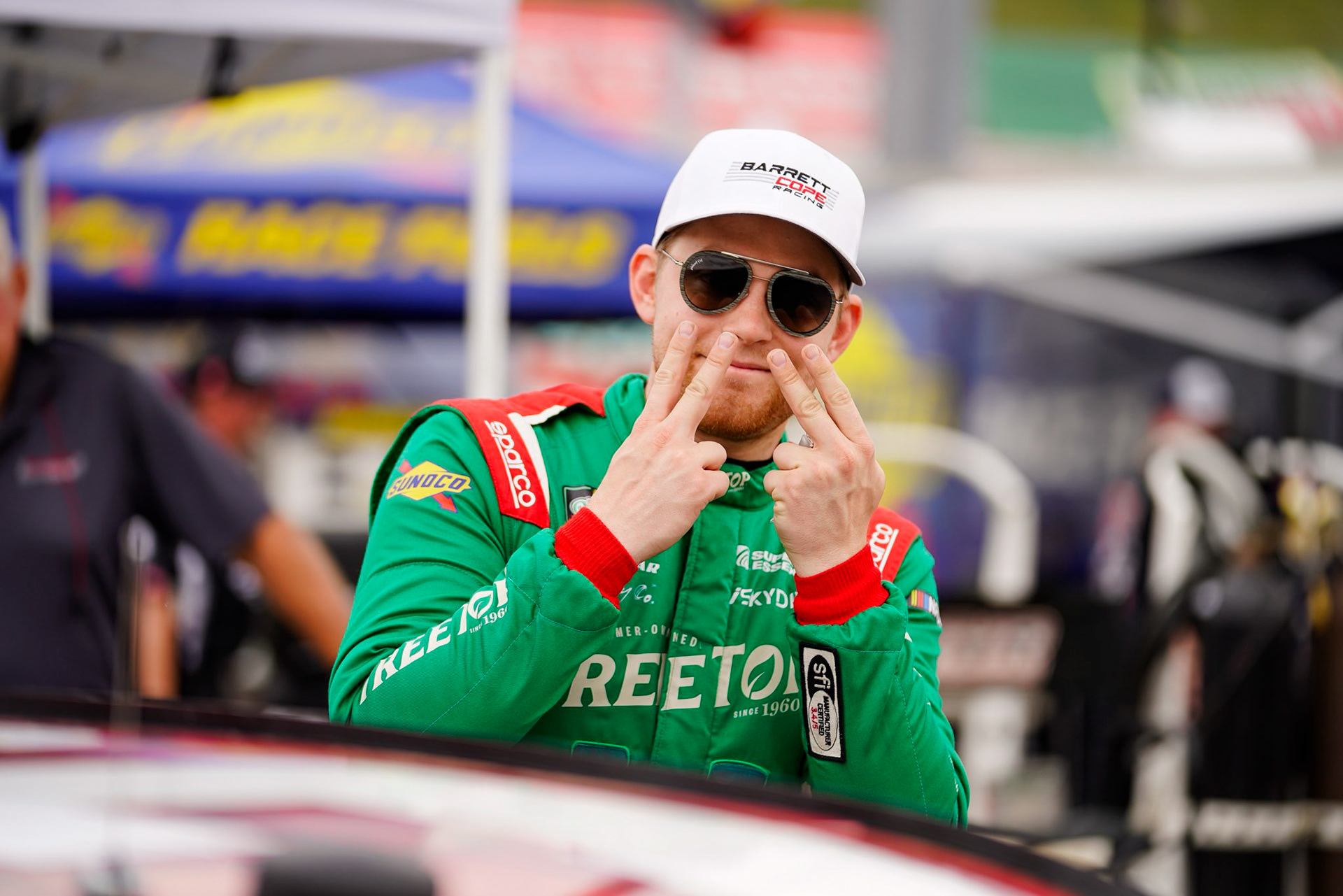
The agonizing waiting game begins.
Credit: @MyattSnider on X
4.
Every week, members of each team on the cusp of making or missing the race gather to watch the timetables shift and flow throughout qualifying. It’s a sweat-inducing, sometimes gut-wrenching, always tumultuous hour of waiting. These groups that will ultimately strive for a top-25 finish represent the protagonists in some of the most intense storylines throughout each race weekend. It’s not about winning the race; it’s simply about being a part of it.
Being sent home affects more than these teams’ pride and drivers’ egos. Motorsports was built on sponsorships and advertising since the first organized races were held over a century ago. Finding and keeping sponsors is a thankless, tireless job that both teams and drivers, as well as the latter's managers, deal with on a daily basis.
While the financials of each team are different, many rely on revenue that comes strictly from the drivers’ corporate connections. From sponsors’ perspectives, it makes more sense nowadays to stick with the personalities that they know, joining them across each new team’s seat they go, instead of staying loyal to one team and hoping its drivers’ personalities match the company’s messaging and executives’ interests.
The ever-changing landscape of race team sponsorship has led to an uptick in cars that carry on them the names of companies and brands that are investments of the teams’ owners. Don’t be fooled by a Kaulig Racing car brandishing LeafFilter, Action Industries, Gabriel-Glas, Hyperice, Cirkul, AG1, or LA Golf imagery. Likewise, don’t be fooled by a Front Row Motorsports car with Long John Silver’s, A&W, or MDS Trucking branding. This is commonplace, especially ‘tween pursuits of good ROI, across NASCAR’s most prolific frontrunners and scrappiest backmarkers. For this particular Darlington race weekend, the No. 30 car carried the logos of Stanton Barrett Family Wines — held by the team’s co-owner, Stanton Barrett — and PROOF Hard Ice Cream, which one of the team’s stakeholders also has an investment in.
Visibility and exposure throughout the main event, in a TV broadcast seen by over one million people on average in the NOAPS, is paramount. If teams and drivers cannot guarantee their car will make the show, then why would companies pay money upfront to what could amount to little more than charity and a few seconds of an untelevised, app-only practice and qualifying session?
Most of the time, sponsorship contracts are contingent on the team making the race. If they fail to do so, then all of the time, money, and resources spent with the explicit goal of being one of the 38 cars in the field go for naught. It means nothing. Sometimes, crew members don’t receive a paycheck for the work they do, too.
One DNQ can serve as a death sentence to a team.
It’s a story that is minimally covered by broadcasts and reporters across the NASCAR world, save for a brief mention in a Tweet by Bob Pockrass or Toby Christie. To the victors go the spoils, and for understandable purposes, too. The vast majority of viewers across all sports are more invested in the winningest teams and drivers, whether to shower with love and praise or to berate with hatred and disgust. There’s no room in this cramped dive bar for a consistent spotlight to shine on the backmarker battle in the corner. Perhaps it should be more of a dimmer switch, anyway.
Credit: David Jensen/Getty Images/NASCAR Media Photo Gallery
5.
It takes just over half a minute for drivers to round all four corners of Darlington Raceway on their flying lap. When one car makes its way into the garage during its cooldown lap, the next is sent out by the official situated at the release point on this peculiar pit road exit. Altogether, it takes roughly 55 seconds for each new lap time to post on the pit board.
Snider, DiBenedetto, and the rest of the Barrett-Cope Racing and Joey Gase Motorsports crew members watch these times splash on their screens. Their fingers point towards upcoming qualifiers that may help or hurt their odds, as they have struggled or surged in recent weeks. They do mental math, then begin to count both aloud and internally to understand how many more drivers need to qualify worse than them, or in between them, to make the show.
It is halfway through the session, and neither Snider nor DiBenedetto is safe, although one is feeling more comfortable than the other. DiBenedetto only needs to beat one more driver’s time to be in the show. Snider, meanwhile, needs one of two things to happen: every remaining driver beats the No. 35’s time, or four more drivers qualify worse than him. The first one, while unlikely, is much less of a hope and prayer than the second one, as competitors with consistently fast speeds are rolling out now.
In Las Vegas, Jordan Anderson Racing's Blaine Perkins wedged himself between Williams' and Snider's times, doing so by laying down a lap that was just 0.05 seconds slower than the No. 92 car. This put Williams in the show and sent Snider home for the first time in his career.
Perkins, driving the No. 31, rounds turn four on his flying lap. As he flies across the line, the screens confirm the precise feeling this portion of pit road had: Perkins just set a solid time, under 31 seconds.
It helps Snider more than DiBenedetto. This becomes the theme of the next 15-or-so minutes in both the Nos. 30 and 35 stalls on pit road. Snider needs perfection from every single competitor remaining. DiBenedetto needs a singular, large mistake.
There is an anxiety in the air that is palpable, but difficult to properly explain, when you are near competitors in moments like these. They sit for moments at a time, then, almost as if their body decided for them before their consciousness was made aware of that decision, they rise, pacing back and forth. Thumbs fidget. Legs shake. Feet tap. They watch helplessly as all the preparation and execution they’ve made thus far teeters on the edge. In fact, they can do nothing but watch, as we all are, to see where the chips fall. They don’t care who gets the pole, as long as their competitors beat whom they need to beat and lose to whom they need to lose to.
And so far, with only a few drivers left to go, perfection looks great for Snider and Barrett-Cope Racing.
Credit: Jonathan Bachman/Getty Images/NASCAR Media Photo Gallery
The track has been speeding up as more rubber is laid down by each car before the last, providing additional grip to the next driver up. Five drivers have yet to make their runs, and so far, DiBenedetto is set to finish this session in 33rd place, one position below where he needs to be to qualify for the race in a few hours.
For Snider, all he can hope for is that the remaining five drivers — Love, Bell, Creed, Allgaier, and Larson — don’t wreck their race cars in their quests for pole position.
Love’s lap is mostly uneventful until he, like Snider, loses the back end of the car through turns three and four. He records a lap time two-tenths behind provisional polesitter Carson Kvapil, good enough for what eventually becomes a top-10 grid position.
Too close for comfort in the Barrett-Cope Racing camp. Not close enough, thinks the Joey Gase Motorsports side.
Bell, the Cup competitor that he is, gets as close as he can to the wall on the exit of turn four, carrying more speed than he knows what to do with. He, too, gets loose, but he still sets the fastest lap of the session.
Three to go.
It’s Creed’s turn, and he flashes into turn one with lots of speed. Actually, too much speed; he smacks the wall mid-corner. It immediately takes him out of contention for the pole, and it may give DiBenedetto a chance. For a brief moment, the pendulum of hope swings towards his side of pit road. Will Creed have to abandon his lap? Is the damage too severe? Is there anything wrong with the car?
Snider’s flash of internal questioning is on the other side of the same coin. Can Creed continue? Is the damage minimal? Is the car okay?
Creed’s No. 00 zooms down the backstretch, whistling angrily by pit road. It seems unaffected by the brief knock in turn one, and the driver is unmoved. Like so many before him, Creed gets loose in the second of two pairs of turns, but he keeps his car aimed forward.
He crosses the finish line. His name and number slot next to his position: 11th.
Hope is back on the menu for Snider. If it wasn’t likely before, it certainly seems like he will be in the show after Creed’s almost disastrous mishap. He won’t acknowledge that, though. Neither will the rest of the Barrett-Cope Racing team, nor friends or guests, nor should DiBenedetto and Joey Gase Motorsports fully acknowledge that the cards are now stacked against them. Akin to saying the word “shutout” late in a hockey game or “perfect game” late in a baseball game, you don’t want to celebrate too soon.
Allgaier’s lap begins. No first or second corner mistake, and he streaks down the Boeing Backstretch. The car is stable through turn three and almost kisses the wall on the exit of turn four. He crosses the line in a provisional third-place position.
One to go.
This 50-minute qualifying session comes down to Kyle Larson, one of the best drivers in both the Cup Series and NOAPS at The Track Too Tough Too Tame. There’s no way he qualifies on time below the No. 35; Larson is just too good. JRM is just too good, too prepared. It would take a wild act of God, a subtle and unexpected bump in the asphalt, to careen his car into the wall, ending his run prematurely.
There is no act of God. Larson takes pole position.
The Barrett-Cope Racing No. 30, driven by Myatt Snider, makes the race. There is more relief than jubilation. Snider will say that the car had a little bit more in it than the lap he put down. Regardless, he and the team are in the show.
The Joey Gase Motorsports No. 35, driven by Matt DiBenedetto, gets bumped. There is exasperation. The team did almost everything right. Because their lap was 0.055 seconds slower than the No. 07’s lap, they will not participate in the 200-mile race this afternoon.
This type of battle wages almost every week, at every track, across NASCAR’s second division national series. Human interest naturally draws eyes above 32nd place, looking at the top of the leaderboard, but these battles represent the weekly trenches that are meandered through.
Few remember who finished second. Who will remember the teams and drivers that focused on 32nd?